
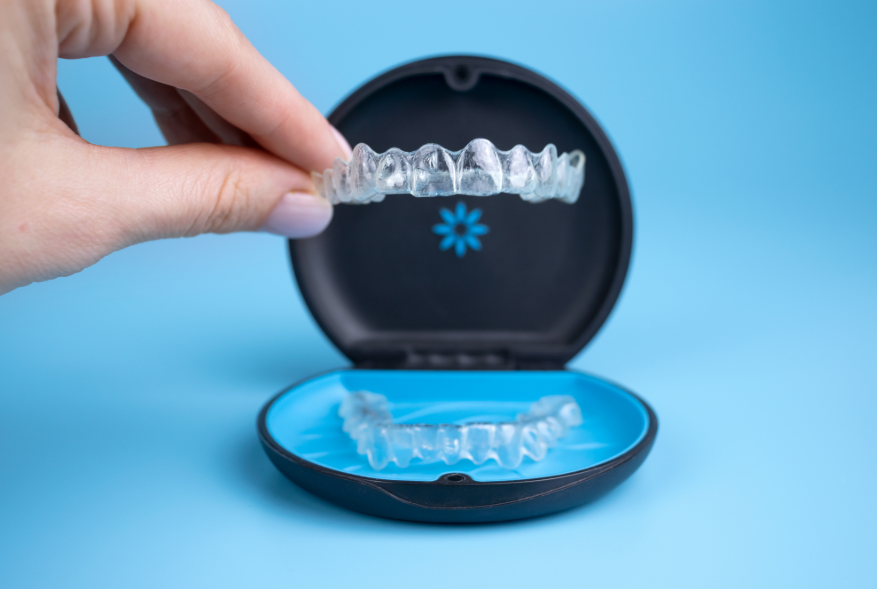
If you grind your teeth, you may wonder whether Invisalign treatment is still an option—or whether clear aligners can even survive nightly clenching and grinding. Since Invisalign trays are designed to gently move teeth over time, it’s understandable to question whether bruxism and orthodontic treatment can work together.
The good news? Grinding your teeth does not automatically rule out Invisalign. In fact, depending on your situation, Invisalign may even provide some unexpected benefits along the way.
What Is Bruxism?
Bruxism is the habit of grinding, clenching, or pressing your teeth together. Some people do it during the day, while others grind their teeth during sleep without realizing it.
Common signs of bruxism include:
- Waking up with jaw soreness
- Frequent headaches
- Tooth sensitivity
- Flattened or worn teeth
- Chipped enamel
- Tight facial muscles
- Clicking or discomfort in the jaw
Over time, untreated grinding can lead to tooth damage and place additional stress on your bite.
Can You Still Get Invisalign If You Grind Your Teeth?
In many cases, yes.
People who grind their teeth are often still good candidates for Invisalign treatment. Before starting, your dentist will evaluate factors such as the severity of grinding, the condition of your teeth, your bite alignment, and your overall oral health.
If grinding has caused significant tooth wear or damage, your dentist may recommend addressing those concerns first before beginning orthodontic treatment.
Every case is different, but bruxism alone does not necessarily prevent someone from qualifying for Invisalign.
Can Invisalign Hold Up Against Teeth Grinding?
Invisalign aligners are made from durable medical-grade plastic designed to withstand everyday wear for approximately one to two weeks per tray.
That said, grinding places additional pressure on aligners.
Some patients who grind their teeth may notice aligners become cloudy, show signs of wear sooner, or occasionally crack if clenching is severe. Your dentist can monitor your progress and determine whether adjustments are needed throughout treatment.
Since aligners are replaced regularly during Invisalign treatment, normal wear is often manageable.
Can Invisalign Actually Protect Your Teeth?
Interestingly, Invisalign trays may provide a degree of protection while they’re being worn.
Because the aligners create a thin barrier between upper and lower teeth, some patients experience less direct tooth-on-tooth contact during clenching or grinding. While Invisalign is not designed to function as a dedicated nightguard, it may help reduce certain types of enamel wear during treatment.
In addition, correcting alignment problems can sometimes improve bite function and reduce uneven pressure on teeth.
However, Invisalign is not considered a treatment for bruxism itself. If grinding remains a concern, your dentist may recommend additional strategies to help protect your teeth.
Why a Personalized Evaluation Matters
Teeth grinding and tooth alignment are closely connected, but there isn’t a one-size-fits-all answer.
An evaluation allows your dentist to understand what’s causing the grinding, assess any existing damage, and determine whether Invisalign is the right fit for your goals and oral health needs.
With the right plan, many patients are able to improve their smile while still protecting their teeth from unnecessary wear. Grinding your teeth doesn’t always mean putting your smile goals on hold.
About the Practice
Bridge Mill Dental Care. Dr. Candon and Dr. Carver provide personalized dental treatment with an emphasis on comfortable care and long-term oral health. The team offers Invisalign treatment to help patients achieve healthier, more confident smiles while creating individualized treatment plans based on each patient’s unique needs and goals.
Call us at (803) 650-3925 or schedule your appointment online.